PlayableNotes

For piano teachers

Transpose piano music to any key

Too many sharps for a beginning reader, or too high for the singer? Ask for “a key with no sharps or flats” or “put it in G”. Every note, chord and the key signature move together.

Drop a photo or PDF of piano music here

A phone photo, a screenshot or a PDF, one page or many. MusicXML works too.

You’ll see the pages and the credit cost first. Then sign up free with Google or email, no card, and the reading starts: 50 free lines of music, about 7 to 10 pages.

No page to hand? Open a free piece from the library: it plays at once, no account needed.

Put this in a key with no sharps or flats.
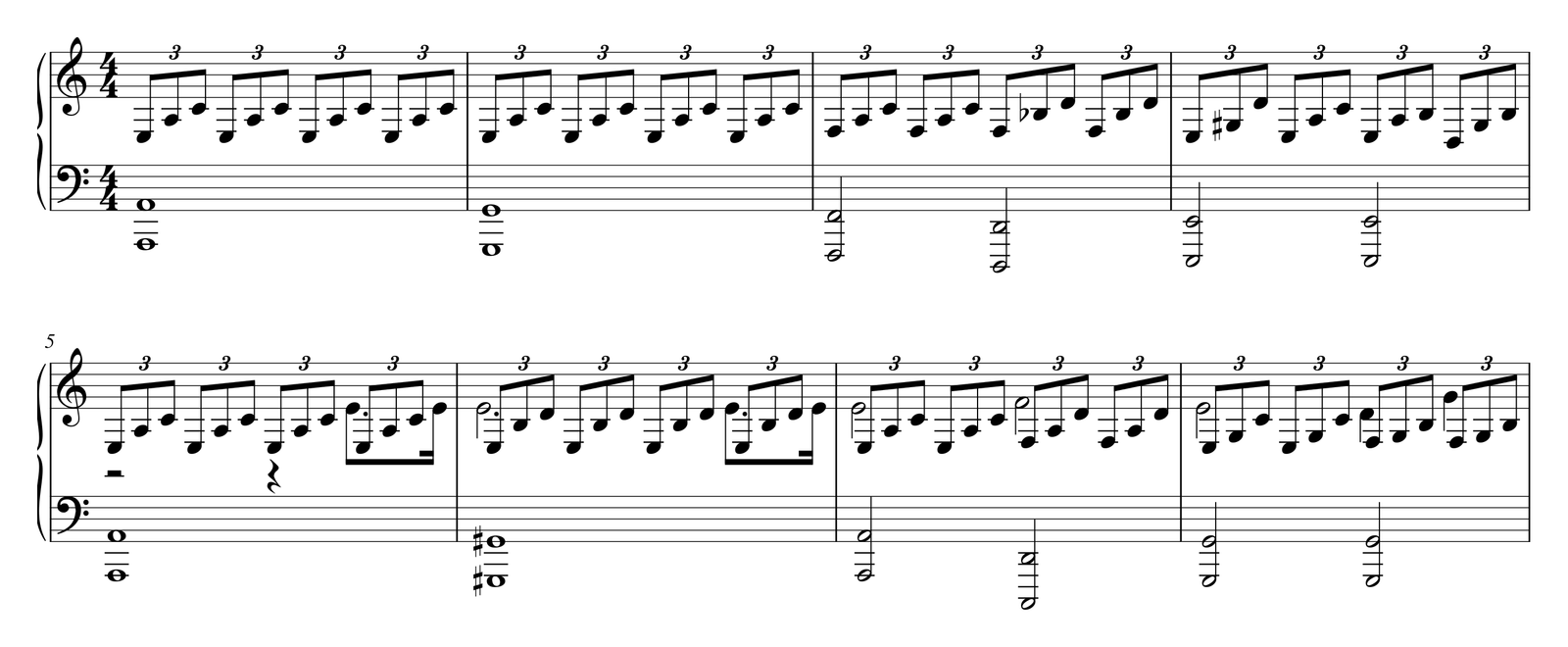
Moonlight Sonata, 1st movement (Op. 27 No. 2), bars 1–8, the easier version PlayableNotes made for the request “Put this in a key with no sharps or flats.”.

Moonlight Sonata, 1st movement (Op. 27 No. 2) · Ludwig van Beethoven

The AI’s reply: Transposed the entire score down a major third to a key signature with no sharps or flats. The rhythms are unchanged, and chromatic accidentals are preserved.

Level: Intermediate (about Grade 6), hard to read → Same notes and rhythms, much easier to read
Follow a complete Minuet from PDF to two teaching versions →

Both hands, every chord

The whole score moves together, including accidentals inside the music.

Any key you ask for

Name the key, or describe it: “fewer flats”, “a whole step lower”.

Print it right away

A clean PDF in Letter or A4 with the title at the top.

How it works

  1. Snap it. Take a photo, grab a screenshot, or upload a PDF. Review the page and credit cost, then read it into an editable score. Timing depends on the page.
  2. Ask. Say what your student needs in plain words.
  3. Hear it, fix it, print it. Play it back, click any note to change it, and print a clean PDF.

Watch a page move from G to F

A real page in G, moved down a whole step for a singer with one request. Both hands, the key signature and the accidentals change, and the G version is kept.

Real screen captures. The reading (45 s) and the AI edit (49 s) are sped up; piano audio is rendered from the exported MIDI. Read the transcript.
Transcript

Same piece. The key you need. G major → F major. Your page is in G. You need F. The singer needs it a whole step lower. Upload a photo or PDF. 1 credit per line of music. This page has 6. Reading takes a minute or so. (Sped up; real time 45 s.) It plays. Check it against your page. Ask for the key in plain words: "Move this down a whole step to F major." About a minute. Every note moves. (Sped up; real time 49 s.) One sharp out. One flat in. Both hands, down a whole step. It tells you what it changed. Accidentals move too. C♯ becomes B♮ in both hands (bars 21–23). The G version is kept too. Retitle it, so the print says F. Hear it in F before you print. Download the PDF. Print it. Also MusicXML and MIDI. Name the key, or describe it. "Move it to an easier key" → C major. Or name it: "Put it in C major for my student." PlayableNotes. Try it free: 50 credits. About eight pages of piano music. playablenotes.com. Key changes, playback and PDFs are free. Reading uses credits.

Frequently asked questions

How do I transpose piano sheet music to another key?

Upload a photo, screenshot or PDF of the page, or open a piece from the free library, and check the reading. Then ask for the key: “put it in G”, “a whole step lower” or “a key with no sharps or flats”. The transposed score is saved as a new version you can play, print or download.

Does it transpose both hands and the key signature?

Yes. Every note in both hands moves, including chords and the accidentals inside the music, and the key signature changes with them. Play the new version back to check it before you print.

Can I transpose a song for a singer?

Yes. Name the key, or describe the change, such as “a minor third lower”, then play it back to check it sits where the singer needs it.

Can I transpose and simplify the same piece?

Yes. Ask for one change, then the next: for example, move it to C, then ask for an easier left hand. Each step is kept as a version.

How do I print or export the transposed music?

Print a PDF in Letter or A4, or download MusicXML for notation software or MIDI with a track for each hand.

How much does it cost to transpose a piece?

Transposing a piece is free, like every other change (by hand, or with the AI up to 100 a day). Reading your own page into a score costs 1 credit per line of music, usually 5 to 7 for a page of piano music. New accounts get 50 free credits; then packs start at $10 for 100, with no subscription. Library pieces cost nothing to open or change.

What sheet music can it read?

Printed piano music: a treble and a bass staff played together, from a photo, a screenshot, a PDF or a MusicXML file. It does not read choir, orchestral or band scores, guitar tab or handwritten manuscripts. A reading can have mistakes, so play it back and compare it with your page; you can fix any note.

Scan your first page. The first 50 lines are free.

Photograph a page or upload a PDF, check the credit count, and hear it in a minute or two. Editing, playback, printing and downloads are free.

Upload a page → Or open a free library piece

50 free reading credits. No card needed, no subscription.

A teacher sits beside her young student at an upright piano while the student plays an easier version of The Entertainer.