PlayableNotes

For piano teachers

Simplify piano music for your student

Photograph the page and say who it’s for: “make this easy for a second-year student”. PlayableNotes keeps the tune and rewrites the hard parts, so your student can play the piece they love.

Drop a photo or PDF of piano music here

A phone photo, a screenshot or a PDF, one page or many. MusicXML works too.

You’ll see the pages and the credit cost first. Then sign up free with Google or email, no card, and the reading starts: 50 free lines of music, about 7 to 10 pages.

No page to hand? Open a free piece from the library: it plays at once, no account needed.

Make this easy for a second-year student.
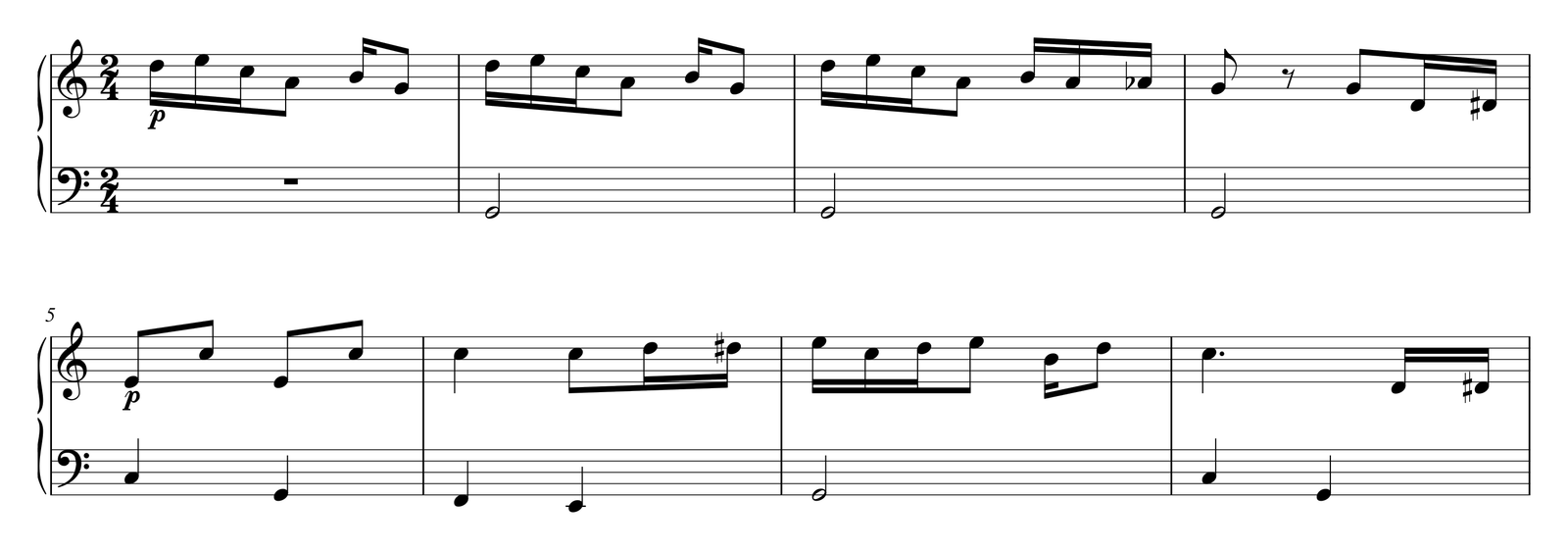
The Entertainer, bars 1–8 (intro + first phrase), the easier version PlayableNotes made for the request “Make this easy for a second-year student.”.

The Entertainer · Scott Joplin

The AI’s reply: I simplified the right hand to single notes, removed ties and octave leaps, and replaced the left-hand chords with steady bass notes. The main melodic figures remain, with easier rhythms in the second half.

Level: Late intermediate (about Grade 5–6) → Elementary (about Grade 1–2)
Beginner level, please: just the melody in the right hand and a simple bass in the left.

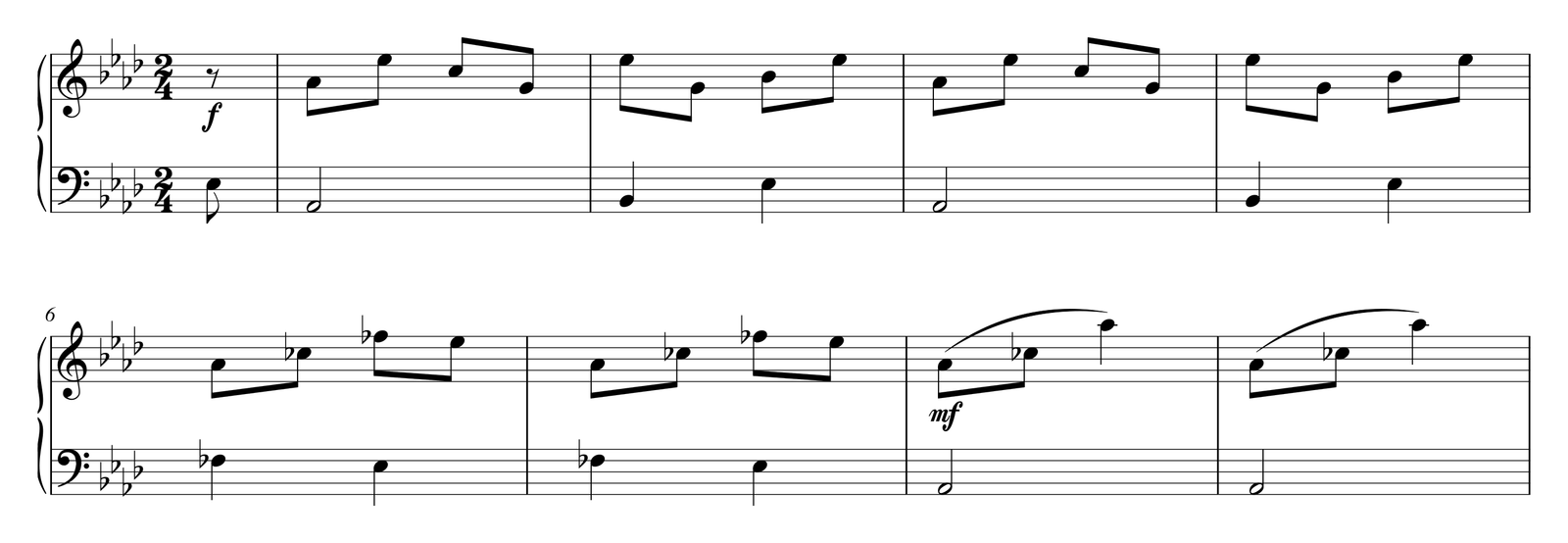
Maple Leaf Rag, bars pickup + 1–8, the easier version PlayableNotes made for the request “Beginner level, please: just the melody in the right hand and a simple bass in the left.”.

Maple Leaf Rag · Scott Joplin

The AI’s reply: I simplified the right hand to a single-note melody with easier rhythms, and replaced the left-hand chords with single bass notes. The final phrase now stays in a more manageable register, with the melody entirely in the right hand.

Level: Advanced (about Grade 7–8) → Beginner–elementary rhythm (about Grade 1), but still four flats to read

Simplify this for an intermediate student.

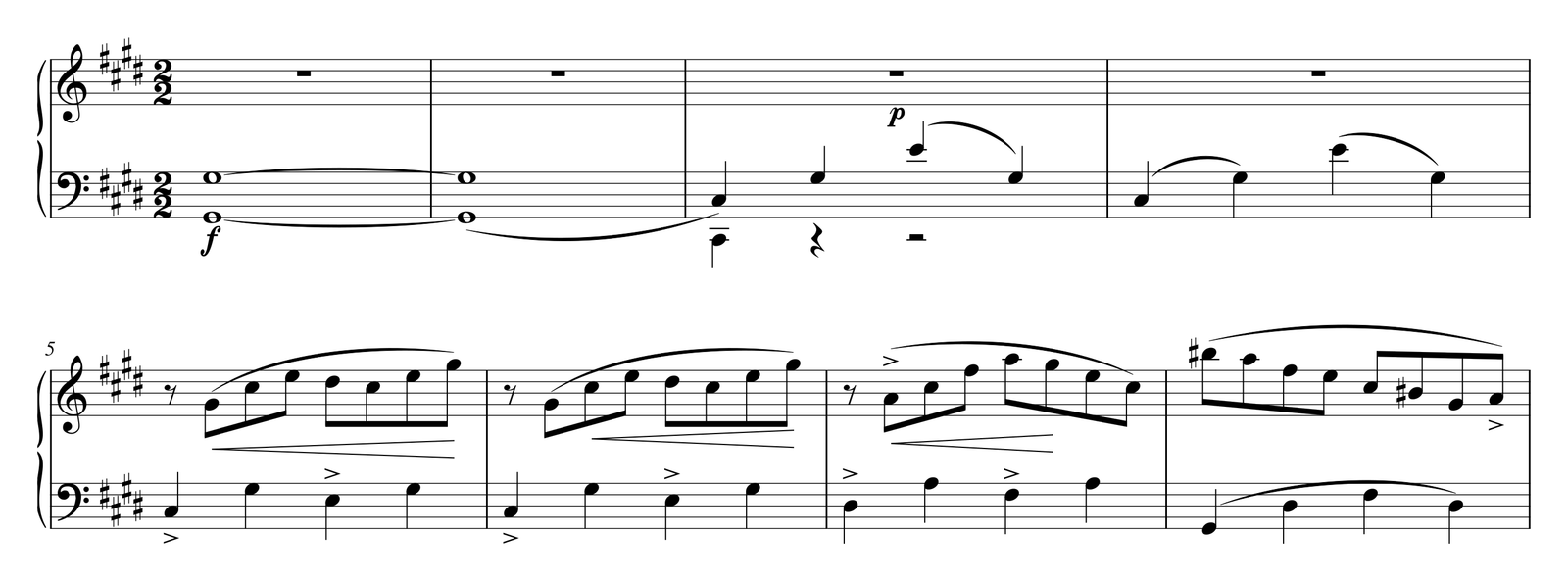
Fantaisie-Impromptu, Op. 66, bars 1–8, the easier version PlayableNotes made for the request “Simplify this for an intermediate student.”.

Fantaisie-Impromptu, Op. 66 · Frédéric Chopin

The AI’s reply: I reduced the right-hand runs to eighth notes and replaced the left-hand triplets with simpler quarter-note patterns. I also lowered the highest passage and removed ornamental chromatic notes, keeping the key, meter, and expressive markings.

Level: Advanced (Grade 8+) → Intermediate (about Grade 3–4)

Follow a complete Minuet from PDF to two teaching versions →

Keeps the melody

The tune your student knows stays recognizable; the busy parts around it get simpler.

Hear it before you print

Every version plays back on a real piano sound, with the notes lighting up as they sound.

Nothing is lost

Each change is saved as its own version. The original is always one click away.

How it works

  1. Snap it. Take a photo, grab a screenshot, or upload a PDF. Review the page and credit cost, then read it into an editable score. Timing depends on the page.
  2. Ask. Say what your student needs in plain words.
  3. Hear it, fix it, print it. Play it back, click any note to change it, and print a clean PDF.

Watch one request make a piece easier

Für Elise from the free library, rewritten for a second-year student from one typed request. The original stays as Version 1, so you can hear both.

A real screen recording. The AI wait is sped up (it took 1 min 43 s) and other waits are shortened; piano audio is rendered from the app’s MIDI export. Read the transcript.
Transcript

Make piano music easier to play. Start from your own photo or PDF. Reading costs 1 credit per line of music. Or pick a piece from the free library. Open Für Elise and click Edit a copy. Your copy. Each change is a new version. Say what your student needs, in plain words. “Make this easier for a second-year student: keep the melody, one held left-hand note per bar, no leaps bigger than an octave.” The AI writes a new version. Sped up: the real wait was 1 min 43 s. “I simplified the left hand to one held note per bar and reduced right-hand chords to the melody.” Same melody here. One held left-hand note per bar. Saved as Version 2, with your request. The original is still here. Hear it first. Back to Version 2, and press Play. Notes light up as they sound. Try it free: 50 credits. playablenotes.com Library pieces, AI edits and playback are free.

Frequently asked questions

How do I simplify piano sheet music for a student?

Upload a photo, screenshot or PDF of the page, or open a piece from the free library, and check the reading. Then type what your student needs, for example “make this easy for a second-year student”. The easier arrangement is saved as a new version you can play, correct and print.

Does the simpler version keep the melody?

That is what it aims for: the tune stays recognizable while octaves, thick chords, busy accompaniments and hard rhythms around it get simpler. Listen to it and compare it with the original before you print, and fix any note yourself or ask for another change.

What levels can it arrange for?

Any level you can describe in words: “a beginner”, “a second-year student”, “about Grade 2”, or “just the melody in the right hand with a simple bass”. There is no fixed list of levels.

Can I simplify only part of a piece?

Yes. Press Select measures, tap the first and the last measure of the passage, then choose Simplify: the AI is asked to make only those measures easier and leave the rest alone. The changed measures are tinted and listed so you can check.

Can I get the original back?

Always. Each change is saved as its own version, and Before | After switches between the music before the request and the new version. Restore any earlier version at any time.

How much does it cost to simplify a piece?

Simplifying a piece is free, like every other change (by hand, or with the AI up to 100 a day). Reading your own page into a score costs 1 credit per line of music, usually 5 to 7 for a page of piano music. New accounts get 50 free credits; then packs start at $10 for 100, with no subscription. Library pieces cost nothing to open or change.

What sheet music can it read?

Printed piano music: a treble and a bass staff played together, from a photo, a screenshot, a PDF or a MusicXML file. It does not read choir, orchestral or band scores, guitar tab or handwritten manuscripts. A reading can have mistakes, so play it back and compare it with your page; you can fix any note.

Scan your first page. The first 50 lines are free.

Photograph a page or upload a PDF, check the credit count, and hear it in a minute or two. Editing, playback, printing and downloads are free.

Upload a page → Or open a free library piece

50 free reading credits. No card needed, no subscription.

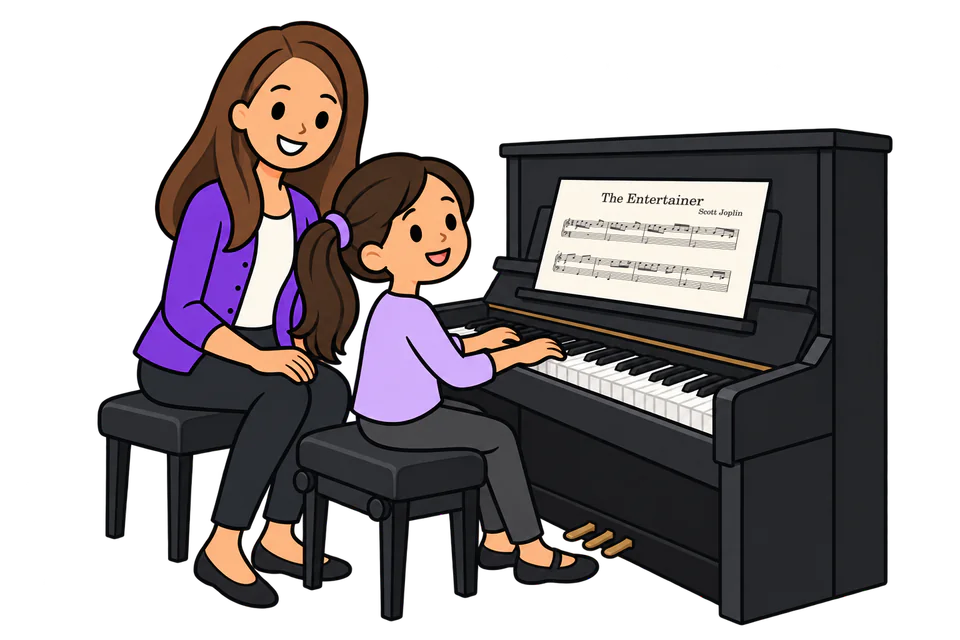
A teacher sits beside her young student at an upright piano while the student plays an easier version of The Entertainer.