For piano teachers · A worked example from PlayableNotes
Keep the tune. Bring the left hand closer.
Your student can manage the melody, but the bass jumps break the pulse. Make a complete study with closer left-hand positions and the same right hand.
Try it with your music · 50 free reading credits. Editing, playback and exports are free.
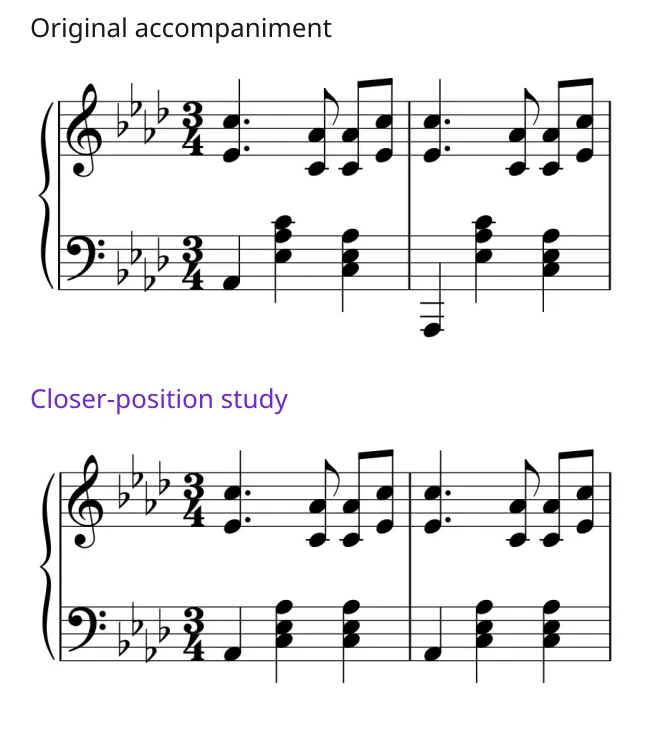
Less jumping. The same waltz pulse.
In bar 2, the deep bass moves up an octave and the next chord comes closer. Compare both versions at the same tempo.
Original accompaniment
Closer-position study
What changes in the complete study
Kept: the right-hand notes, left-hand rhythm and all 44 bars.
Changed: bass registers, chord positions and some doublings.
Still to practise: octave chords and later right-hand passages remain.
Follow the worked example
- Read the piano page and check the notes.
- Make a copy and ask for one precise change.
- Check every bar before teaching from the study.
A real PDF reading and checked AI arrangement. Both versions use the same practice tempo of 90.
Print all 44 bars.
The complete three-page study and original are both available. Keep them together for the lesson.
Original accompaniment
Closer-position study
Printed source edition · Musical checks and source notes
What does the next student’s piece need?
Bring the piano photo or PDF you are using. Check the reading, describe one musical change for this lesson, then hear and print the version you want to teach.
New pages use reading credits. Further edits and versions are free.