A worked example for church pianists
Your part is in G. The service needs F.
Move this complete Amazing Grace piano arrangement down a whole step. Keep the melody, rhythm and accompaniment, then check the new part before rehearsal.
G → F · one whole step lower · complete two-page score.
Compare G and F
The interactive player offers Original · G and Needed key · F. Play the pickup and opening four bars, or select the complete 80-second arrangement. Only the opening notation is shown; playback uses 72 BPM and both hands. Changing key or playback mode stops the piano; press Play to start again.
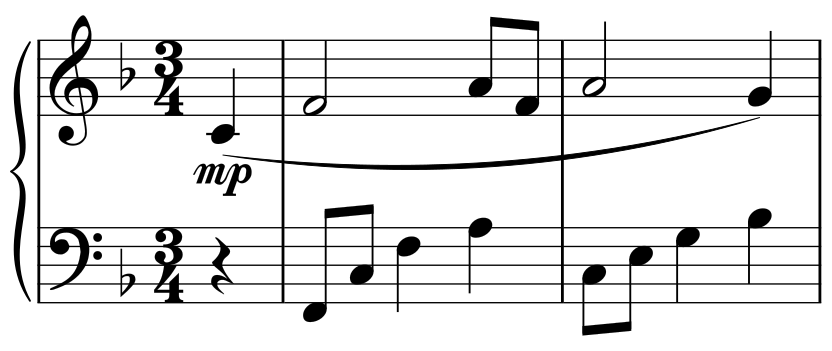
Download complete F PDF · 2 pages · Original G PDF
Source pedal marks are omitted; some expression and layout differ. Keep the source for comparison.
Take the complete part.
The second verse becomes chordal. The complete files include both verses, triplets and the tied final partial bar.
See both F pages
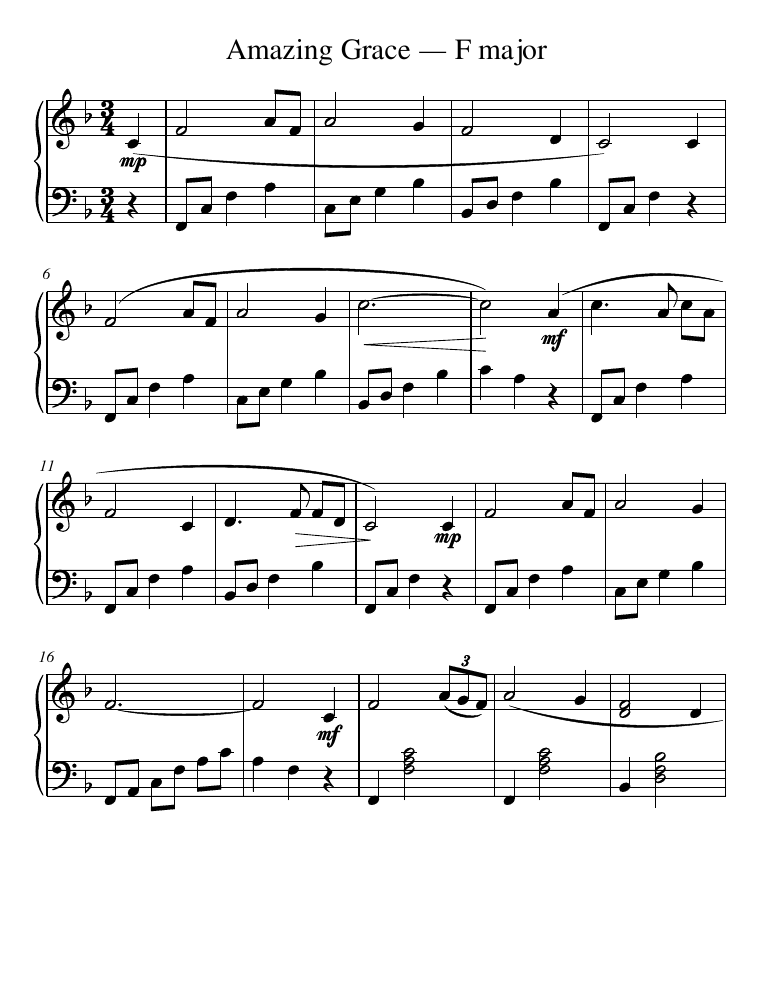
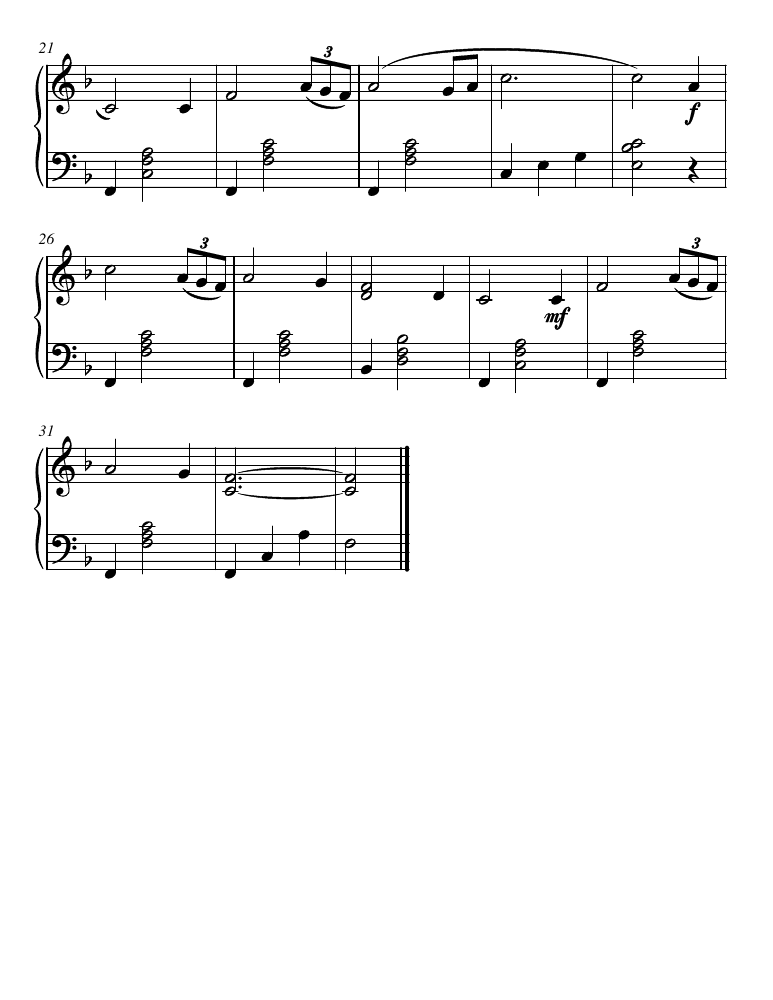
Needed key · F: Complete PDF · MIDI · MusicXML.
Original · G: Complete PDF · MIDI · MusicXML.
Source pedal marks are omitted; some expression and layout differ. Keep the source for comparison.
What we checked, and what differs from the source
This is a hypothetical service-key request demonstrated with a genuine PDF reading in our development account. The raw reading had two low bass notes, in printed bars 3 and 7; both were corrected from B to C in the G score. The complete AI transposition then preserved every note and rhythm at exactly −2 semitones. We removed two unsupported title/tempo lines from the AI notation text and set the title through the normal score controls.
The complete arrangement totals 96 quarter-note beats, including the pickup and final partial bar. Ties, triplets and the change from broken chords to chordal accompaniment are retained. Source pedal marks are not reproduced, and layout and some expression differ: this is checked notation, not a facsimile. Piano playback uses a steady selected tempo; it does not follow a singer or model service rubato.
Keep both keys. Print the one you need.
- Read your piano PDF or photo and check it against the page.
- Make a copy and request the agreed key.
- Compare both complete versions, then print.
50 free reading credits. No card needed. New PDF and photo readings use credits. Key changes, editing, playback and exports are free.