PlayableNotes

For piano teachers

An easier left hand, the right hand untouched

When the accompaniment is what keeps falling apart, simplify only that: wide leaps, running patterns or repeated chords become something a student can hold together, while the melody stays as written.

Drop a photo or PDF of piano music here

A phone photo, a screenshot or a PDF, one page or many. MusicXML works too.

You’ll see the pages and the credit cost first. Then sign up free with Google or email, no card, and the reading starts: 50 free lines of music, about 7 to 10 pages.

No page to hand? Open a free piece from the library: it plays at once, no account needed.

Make the left hand easier, but keep the right hand exactly as it is.
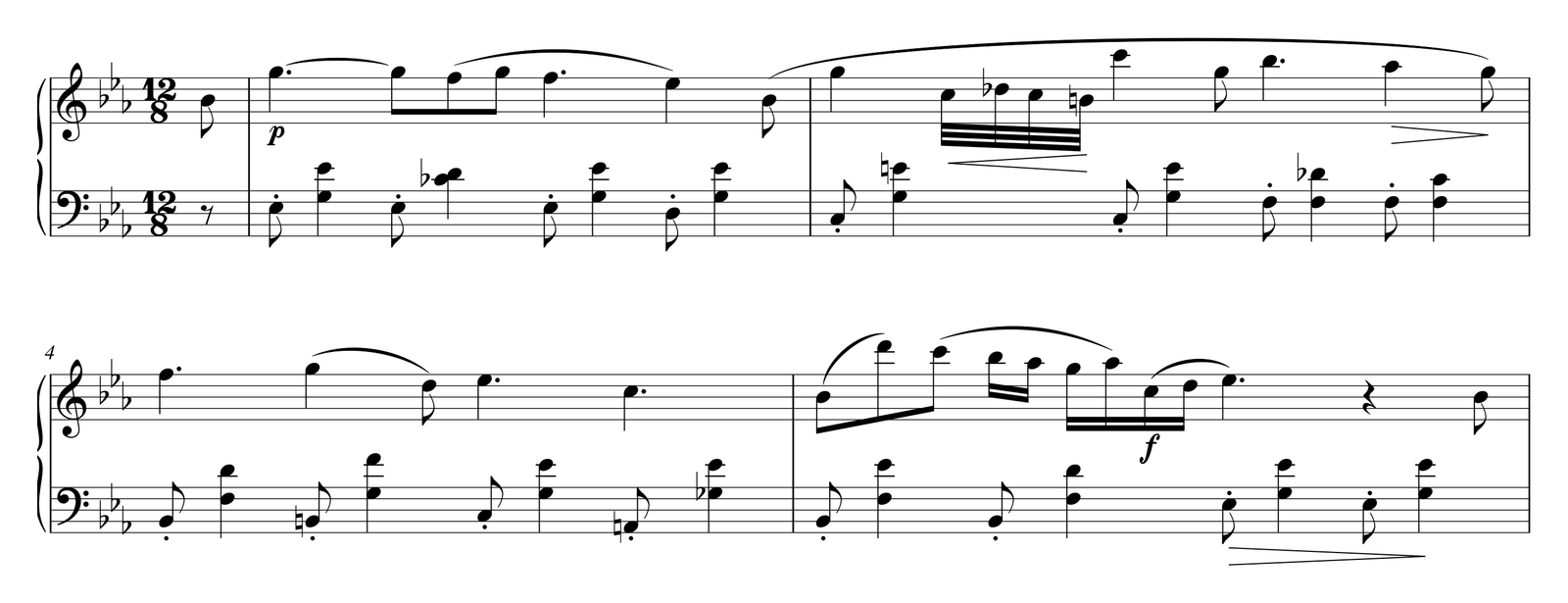
Nocturne in E♭, Op. 9 No. 2, bars pickup + 1–4, the easier version PlayableNotes made for the request “Make the left hand easier, but keep the right hand exactly as it is.”.

Nocturne in E♭, Op. 9 No. 2 · Frédéric Chopin

The AI’s reply: Simplified the left hand to a bass eighth note followed by a two-note quarter-note chord on each beat, raising the lowest bass notes to reduce leaps. The right hand is unchanged.

Level: Advanced (about Grade 7–8) → Upper intermediate (about Grade 6): right hand as written, easier left hand
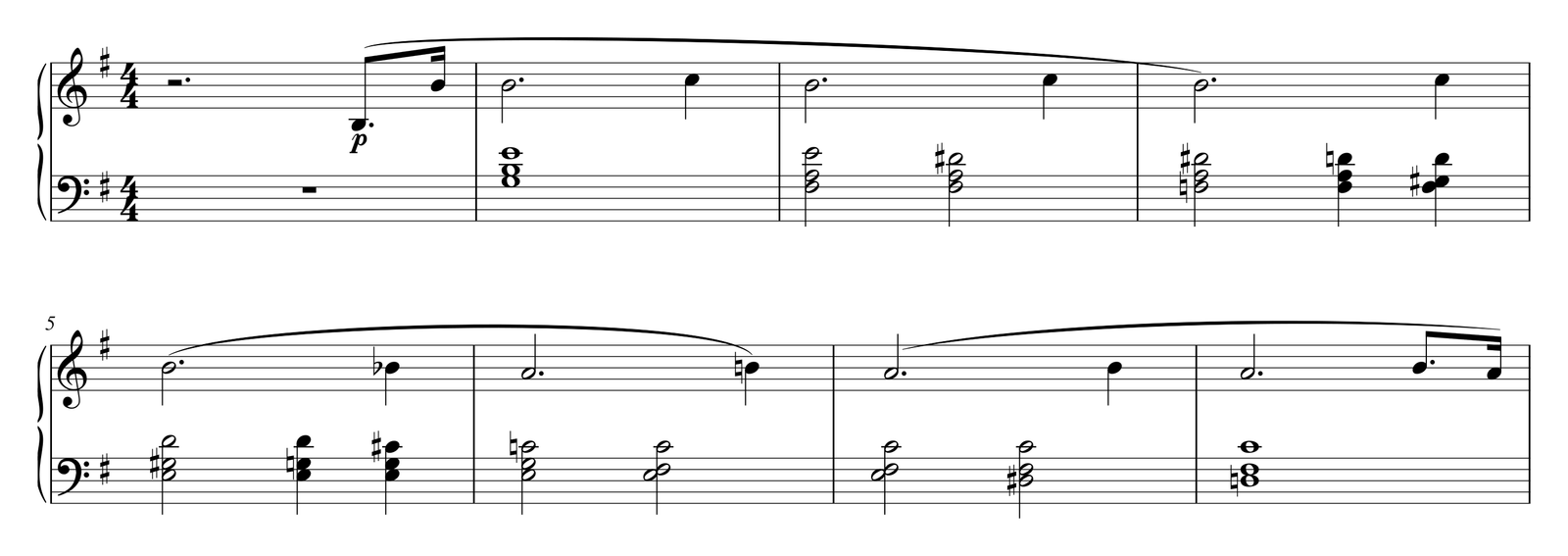
The repeated chords in the left hand are too much for my student. Make them simpler and keep the melody as it is.

Prelude in E minor, Op. 28 No. 4, bars pickup + 1–7, the easier version PlayableNotes made for the request “The repeated chords in the left hand are too much for my student. Make them simpler and keep the melody as it is.”.

Prelude in E minor, Op. 28 No. 4 · Frédéric Chopin

The AI’s reply: I replaced the repeated left-hand eighth-note chords with sustained chords, keeping the harmonic changes in place. The right-hand melody is unchanged.

Level: Intermediate (about Grade 5) → Elementary–intermediate (about Grade 3)

Follow a complete Minuet from PDF to two teaching versions →

Right hand stays as written

Ask it to keep the melody exactly as it is, then compare Before | After to check.

Same harmony underneath

The left hand keeps the chords, in a shape a student can play.

Fix any note yourself

Click a note to change it if you want a different voicing.

How it works

  1. Snap it. Take a photo, grab a screenshot, or upload a PDF. Review the page and credit cost, then read it into an editable score. Timing depends on the page.
  2. Ask. Say what your student needs in plain words.
  3. Hear it, fix it, print it. Play it back, click any note to change it, and print a clean PDF.

Frequently asked questions

How do I make only the left hand of a piano piece easier?

Read the page into PlayableNotes (or open a library piece), then ask: “make the left hand easier and keep the right hand exactly as written”. The new left hand is saved as a new version, and the original stays one click away.

Will the right hand change?

It shouldn’t when you ask for it to stay as written, but check: Before | After switches between the music before your request and the new version, and when only part of the piece changed, the changed measures are tinted and listed. Fix any note yourself, or restore the earlier version.

What kind of left-hand parts can it simplify?

Wide leaps, running patterns such as broken-chord accompaniments, repeated chords and octave basses. They become block chords or single bass notes that keep the same harmony.

Can I choose the new left-hand pattern?

Yes. Describe it, for example “block chords on the beat” or “just the bass note on beat one”, or click any note to change the voicing yourself.

How much does it cost to simplify the left hand?

Simplifying the left hand is free, like every other change (by hand, or with the AI up to 100 a day). Reading your own page into a score costs 1 credit per line of music, usually 5 to 7 for a page of piano music. New accounts get 50 free credits; then packs start at $10 for 100, with no subscription. Library pieces cost nothing to open or change.

What sheet music can it read?

Printed piano music: a treble and a bass staff played together, from a photo, a screenshot, a PDF or a MusicXML file. It does not read choir, orchestral or band scores, guitar tab or handwritten manuscripts. A reading can have mistakes, so play it back and compare it with your page; you can fix any note.

Scan your first page. The first 50 lines are free.

Photograph a page or upload a PDF, check the credit count, and hear it in a minute or two. Editing, playback, printing and downloads are free.

Upload a page → Or open a free library piece

50 free reading credits. No card needed, no subscription.

A teacher sits beside her young student at an upright piano while the student plays an easier version of The Entertainer.